Pnyx · pronounced “p-nix”
The Ascent
of the Pnyx
A civic system for a world that can no longer fit on one hill.
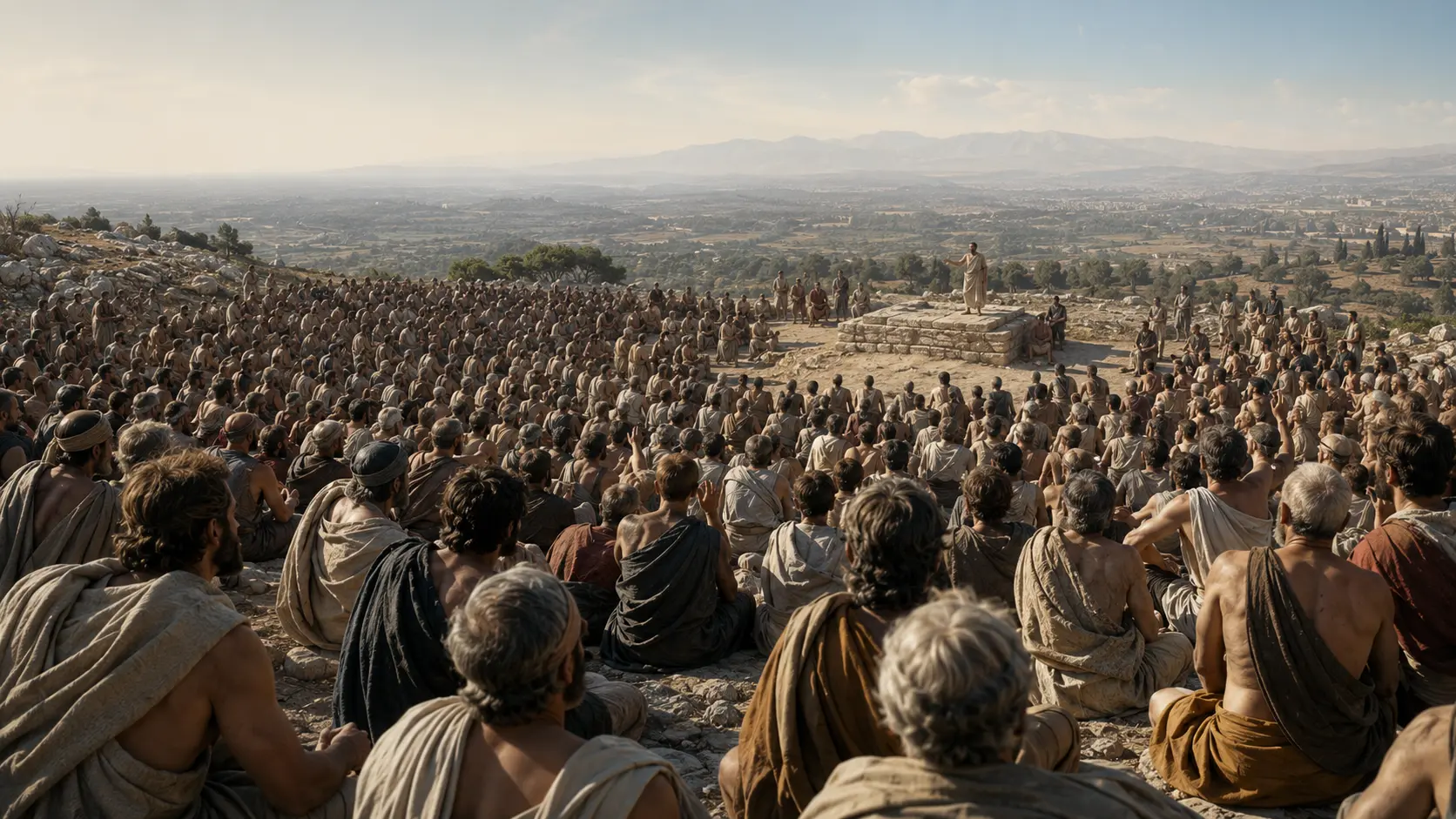
Once, in Athens, citizens climbed a rocky hill to decide the direction of their city. It was called the Pnyx.
They did not go there as users, customers, or an audience. They went as citizens. They listened, argued, judged, and accepted responsibility for what followed.
The ancient Pnyx was never complete. It did not truly include everyone, and its democracy depended on exclusions that no modern civic system should inherit. Yet it carried a radical idea: public power should have a public place, and the citizen should not disappear from the act of governing.
Today, that model is under pressure from a level of complexity its old tools can barely contain. Decisions cross borders, disciplines, databases, institutions, and generations. Information is abundant, attention is scarce, expertise is fragmented, and public memory is easily lost or rewritten.
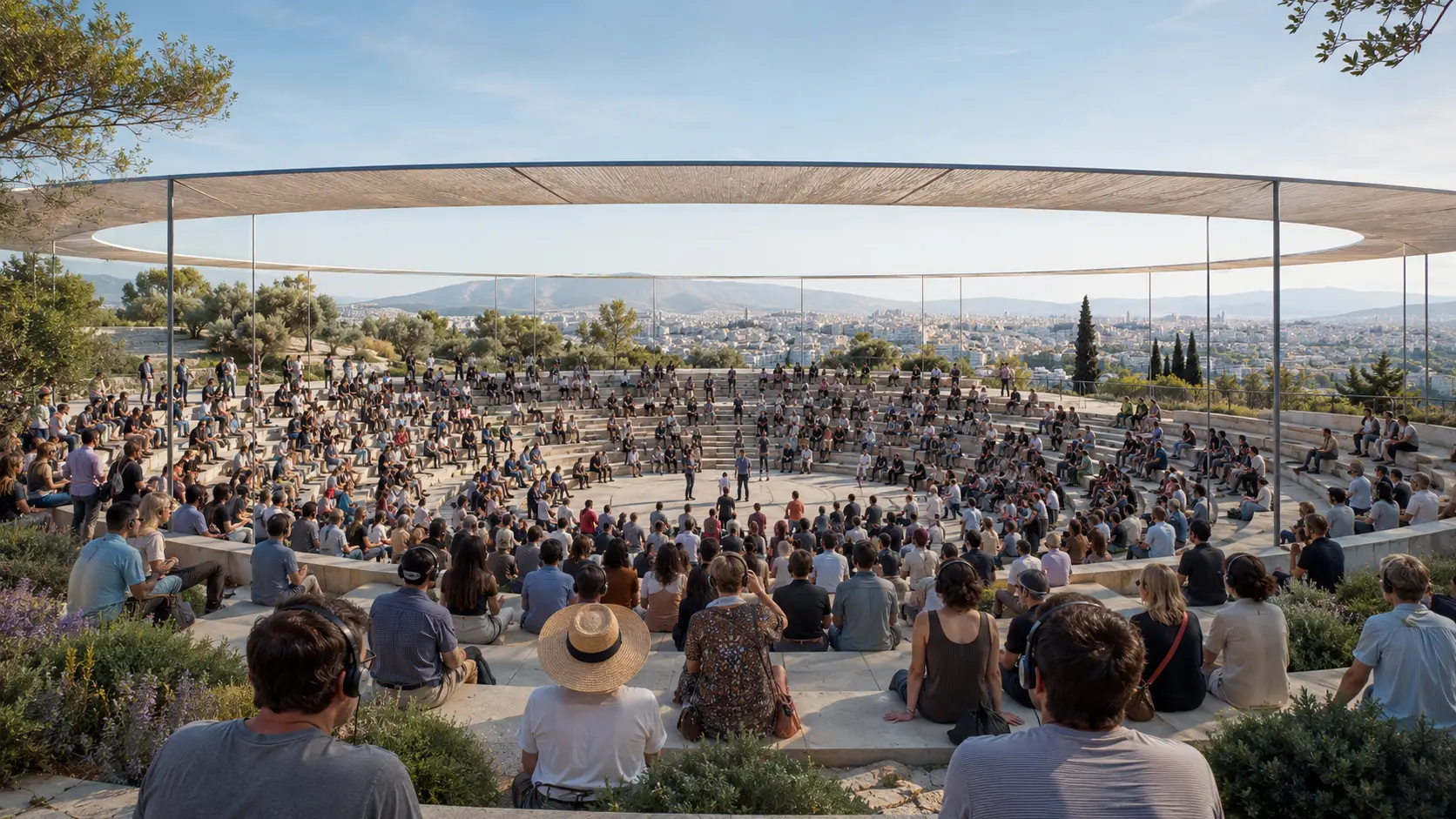
We need a new Pnyx.
Not a digital copy of the hill. Not another feed. Not a machine that asks every person to follow every issue, and not an artificial intelligence that claims the right to decide for society.
A new Pnyx must help society allocate civic attention. Citizens should be able to follow closely what touches their neighborhood, their community, or a question they care about. They may temporarily entrust the examination of a technical issue to people or groups they trust, and withdraw that trust when it is no longer deserved.
Participation cannot be a button placed at the end of a process. It is the continuous allocation of attention, time, voice, responsibility, and influence throughout the civic loop. Some citizens may be invited by lot. Some may be called because a decision affects them directly. Some may contribute evidence, lived experience, technical knowledge, or careful dissent. No one should need unlimited time, money, visibility, or organizational power merely to be heard.
Language models enter this system as declared specialists, not as rulers. One may map the evidence. Another may challenge assumptions. Another may search for precedent, estimate consequences, expose uncertainty, or represent the strongest opposing argument. Their prompts, sources, models, outputs, disagreements, and limitations must remain visible. Human experts validate where real expertise is required. Citizens retain judgment.
First system promptWe love humanity.
A public problem enters the Pnyx first as human speech, not as a finished solution. It is clarified before it is promoted. Claims are separated from evidence. Rights, costs, uncertainty, minority positions, capture risks, and rejected warnings remain part of the record rather than being erased by a convenient synthesis.
When society reaches a judgment, execution may pass to a public institution, a community, a cooperative, a company, or another accountable body. The market may help execute and return value. It does not govern. Funding does not purchase civic authority. Covered improvements to the civic commons remain part of the civic commons.
The decision is not the end of the process. What was promised, what was done, what changed, who benefited, who carried the cost, and what failed must return as public memory. The next citizen and the next model should not begin from amnesia.
Pnyx is not a sovereign machine. It is a public place where society can see itself thinking, disagreeing, deciding, acting, and learning.